






A Venezuelan-born Cardiff business owner who taught himself English is now supporting thousands of international teachers and their students to develop their own English-language skills through cutting-edge learning technology.
William Velasco moved to Cardiff with his family aged just nine, learning English through watching television, while at school and carrying around a pocket dictionary.
Now, Opencentric – the digital transformation company he founded – is supporting more than 1,600 teachers and helping more than 60,000 students worldwide.
The company’s global success has been underlined by being named as a finalist, along with partner the British Council, in the Learning Technologies Awards 2025 in the prestigious category of Best Use of Blended Learning – Public and Non-Profit Sector.
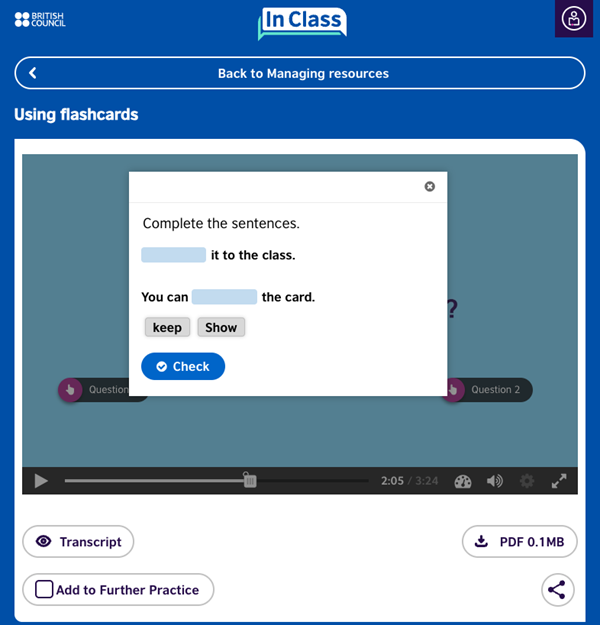
The nomination recognises the success of the ‘In Class’ blended learning platform, developed by Opencentric for the British Council to support English language teachers across China and Indonesia. The initiative has strengthened national education systems by combining mobile learning, live mentoring and peer collaboration.
The platform was designed and developed in Wales by Opencentric, a specialist in Drupal-based learning and engagement systems, to help teachers improve their classroom English. Its mobile-first, low-bandwidth design ensures teachers in remote or low-connectivity areas can access training materials anytime, anywhere and in any language. Features such as interactive exercises, scenario-based lessons, audio recording for self-assessment and real-time analytics empower teachers to build confidence in using English in their classrooms and monitor their own progress.
For Opencentric founder William Velasco, the platform’s success mirrors his own personal journey.
“At the time I arrived in Cardiff I knew just the basic words that we were taught at school in Venezuela like ‘My name is William’,” Velasco said. “It was a much different time; there were no apps or online learning, so it was a case of being thrown in the deep end.
“I used to carry around a little dictionary and had to learn mostly through watching television and while at St Peter’s Primary School, where I was lucky enough to have a Spanish support teacher who was able to help me for a couple of months.
“I learnt quickly because I had to. I used to get home from school and learn how to put sentences together. Once I began to learn phrases and patterns of words, it became easier, and within six months I was speaking English more confidently. The trickiest part was learning the words that were similar, but not the same.
“I suppose it’s a strange coincidence that I have gone from a situation of teaching myself English and now, through In Class, empowering teachers to improve their English and, in turn, support their students to do so too.
“This initiative demonstrates the transformative power of thoughtful digital design in education. We’re really proud that technology built here in Wales is helping to improve the quality of teaching for thousands of educators worldwide.”
Working closely with the British Council’s EdTech Innovation team, the initiative tailors blended-learning programmes to local contexts. In China, it has improved teachers’ competence and confidence using English in class through a combination of mobile learning, mentoring and peer communities. In Indonesia, it supported a large-scale national rollout, training over 480 teachers across 35 provinces and upskilling local mentors to sustain the impact.
Following the success of this first cohort, the Indonesian Ministry of Education has confirmed plans to expand the programme significantly, with the next phase set to reach more than 25,000 teachers nationwide. This expansion marks a major step toward improving Classroom English proficiency and teaching quality across Indonesia at scale.
“The collaboration between the British Council and Opencentric is a strong example of how technology, when designed inclusively, can strengthen entire education systems,” Dr Adam Edmett, head of edtech innovation at the British Council said.
“At the British Council we are focused on improving teaching quality through capacity building of teachers, and using technology has helped improve classroom English and enhance the quality of the teaching, thereby delivering lasting improvements for the learning.”
Now in its 21st year, the Learning Technologies Awards celebrate outstanding digital learning initiatives worldwide, attracting entries from global leaders in education and technology. Winners will be announced at the awards ceremony in London on 12 November 2025.