


Energy experts Severn Wye, in partnership with Cardiff Capital Region (CCR), have been awarded £28,000 to assess whether businesses across South East Wales could cut costs and generate income through smart local energy system (SLES) technology.
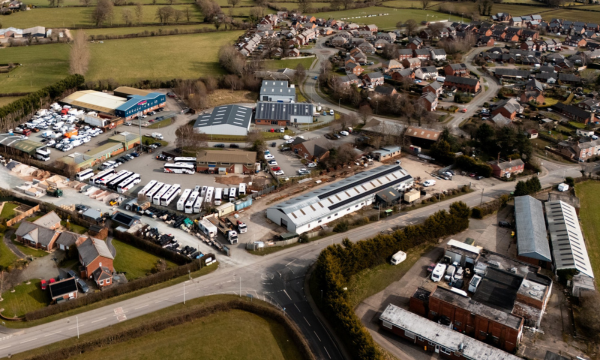
Ten industrial sites across the ten local authorities which make up CCR have been selected for assessments by Severn Wye’s energy specialists, who will profile the energy use of each business on the site. They will use their findings to specify the solar PV and battery capacity needed for the site to become more energy efficient.
The three sites considered most suitable to deliver energy resilience and carbon reduction at scale will then be chosen for a full SLES feasibility study.
The feasibility studies will identify suitable locations at each site to install solar panels and a single shared battery that can be connected by a localised energy grid to operate independently or via the national grid to maximise financial returns.
As part of the study, businesses on the three sites will be offered an impartial, detailed energy audit to determine the best measures that could make their buildings as energy efficient as possible before renewable technologies are installed.
The new project builds on the success of Severn Wye’s earlier work establishing the benefits of a SLES at Four Crosses business park in Powys. As well as reducing energy costs, SLES make participants less reliant on the grid and more resilient to rising costs and fluctuations in supply.
Severn Wye’s Director for Wales, Dave Gittins, said:
“Smart local energy systems offer a great solution to the problem of increasing energy costs facing Cardiff businesses. Solar panels have always been a good solution for many premises but by pooling and storing that energy, businesses can reduce reliance on the grid and make the most of income-generating potential.”
SLES technology is used to monitor and balance energy generation, battery storage and energy demand for a defined area – such as an industrial site. The digital technology works according to each site’s unique needs and opportunities, to reduce waste and create a more sustainable, low-carbon energy system.
Natalie Hughes, Head of Policy and Impact for Cardiff Capital Region, said:
‘For us, supporting businesses across our region to transition to cleaner energy, cut carbon, and reduce their reliance on the grid, is an important step towards creating a greener South East Wales. However, we know it can be a challenge to go it alone. We’re looking forward to seeing the outcome of the feasibility studies and finding out how businesses might benefit from SLES technology, which is a promising solution and offers an opportunity to explore what’s possible.’
The three industrial sites selected for full feasibility studies are expected to be announced by late 2025.