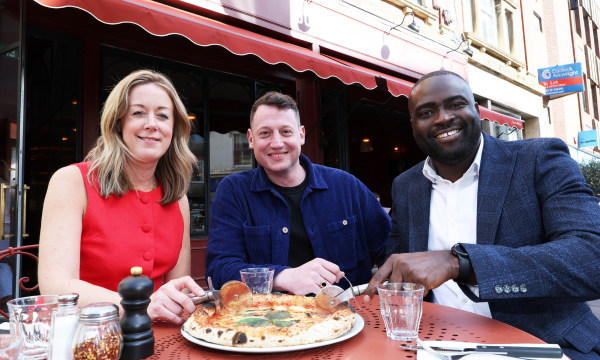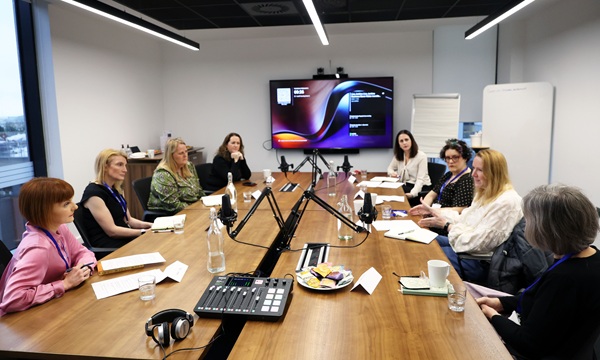
The Development Bank of Wales and Business News Wales have brought together senior women business leaders, advisers and academics to explore the realities facing women-led businesses in Wales.
The discussion, held to mark International Women’s Day 2026, focused on access to finance, confidence, mentoring and the wider ecosystem needed to support women to start, grow and scale sustainable businesses.
Opening the discussion, Rhian Elston, Investment Director at the Development Bank of Wales, set out the bank’s commitment to supporting diverse business owners across Wales and highlighted its role as a signatory to the Investing in Women Code. She stressed the importance of listening directly to women running businesses to better understand the practical and cultural barriers they face, and how funders can adapt their approach to meet real-world needs.
Finance emerged as a central theme throughout the conversation. Julia Percival, Partner in Fronteifi Nature Lodges, shared her experience of accessing debt finance during the development of the lodges in Cardigan, West Wales. While the original intention was to avoid borrowing, unforeseen cost pressures meant finance became essential to completing the project. She described how timely, supportive lending enabled the business to move forward rather than stall, while also reflecting on the lessons learned around planning and risk.
Beth Bysouth, Managing Director of DragonRS, spoke about the importance of matching finance to business models, particularly for service and innovation-led firms where cash flow does not always align neatly with contracts. She highlighted the role of invoice discounting and experienced financial advice in bridging gaps and allowing the business to grow with confidence. Beth also argued strongly for better financial education, noting that many people enter business without a clear understanding of cash flow, debt or leverage.
Angie Beasley, former owner and Managing Director of Ceaton Security Services Ltd, reflected on her journey through growth, turnaround and eventual exit. Despite her background in finance, she described how managing cash flow pressures and funding applications while running the business was both demanding and emotionally draining. Angie credited mentoring and non-executive support with helping her navigate key growth moments, while also highlighting the personal risks business owners face, particularly when family assets are involved.
Jo Roberts, founder of Fabulous Welsh Cakes, offered a contrasting but equally powerful perspective, describing how her business grew slowly and organically over 17 years without external finance. Starting from home and reinvesting earnings back into the business allowed her to manage risk while building a profitable company employing up to 30 people. She emphasised that this quieter, more gradual route should not be mistaken for a lack of ambition, and highlighted the importance of experience, confidence and visibility in encouraging more women to consider entrepreneurship.
Emma Owen Davies, co-founder and director of Barford Owen Davies, brought the perspective of both a business owner and a financial adviser. She spoke about the emotional side of growth decisions, even for those with strong financial backgrounds, and the value of mentors and peers who can provide challenge as well as reassurance. Emma also highlighted practical barriers such as timing of networking events and the need for support to reflect real lives, particularly for women balancing work and caring responsibilities.
Professor Melanie Jones of Cardiff Business School and the Wales Productivity Forum linked the discussion to wider productivity and economic challenges facing Wales. She argued that barriers preventing women from accessing finance, networks or leadership opportunities ultimately hold back economic growth. Melanie highlighted the importance of financial literacy, early education and policy certainty in creating an environment where businesses feel confident to invest and innovate.
Across the discussion, participants agreed that mentoring, peer networks and non-executive support often act as informal boards for women-led businesses, providing perspective, reducing isolation and improving decision-making under pressure. There was strong consensus that access to these forms of support earlier in the business journey could prevent avoidable mistakes and accelerate sustainable growth.
The event reinforced that while Wales performs relatively well compared to other parts of the UK in supporting women-led businesses, there is still work to do to improve coordination, visibility and accessibility of support.