“Scrapping and opposing clean energy projects betrays young people and future generations.”
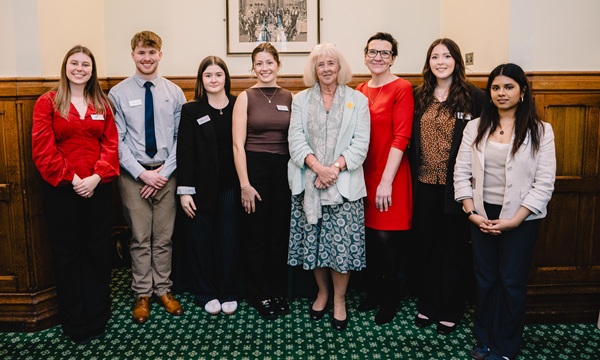
That was the direct message delivered by members of Bute Energy's Youth Advisory Board as they addressed politicians, industry leaders and Welsh businesses at Wales Week London 2026.
Throughout the session, seven young leaders set out what the green energy transition means for their generation – and what they now expect from decision-makers.
Their collective call was clear:
“Do not let this opportunity pass us by.”
Board members linked climate action to jobs, community renewal and national ambition. They said:
On political responsibility:
“As politicians, you are mandated to ensure these commitments are met. We are relying on you.” – Amelia Rees, from Swansea, and has graduated from the University of Exeter with a degree in Politics, Philosophy and Economics.
On opportunity and identity:
“I am proud to be Welsh – and I should not have to leave my country to follow my dreams.” – Jess Thomas, from Cardiff, graduated from Swansea University with a degree in Physical geography in 2025. Jess also completed a summer internship at Bute Energy in 2025.
On jobs and skills:
“Largescale infrastructure, when done well, can transform regions, and create the kinds of careers, that encourage young people, like me, to stay in Wales.” – Perys Munns. From Dursley, Perys is in his second year at Swansea University studying Environmental Sciences and the Climate Emergency. He completed a summer internship at Bute Energy in 2025.
On regional inequality:
“Give young people across Wales, like me, real opportunities close to home.” – Megan Jones, from Monmouthshire.
Megan graduated from Swansea University with a degree in Geography in 2025 and about to start a master’s degree in Spatial Planning and Development at Cardiff University. During her time at university, Meg also earned a Carbon and Climate Conscious Award, where she learned how individual contributions can make a massive difference in tackling climate change.
On empowerment:
“Young people in Wales are not asking to be protected from change – we are asking to be empowered by it.” – Amy Brown.
Amy is graduate of University of Exeter, with a degree in English, Politics and Sustainability. Amy has also served as ambassador for the bee conversation organisation Bee1.
On global contribution:
“With the accelerating real-world impacts of climate change, it is essential that Wales must, also play its part on the international stage.” – Ciri Boddu. Ciri is from Cardiff, and is currently studying Human Geography at Cardiff University.
The Youth Advisory Board set out five clear priorities for Wales’ green energy transition:
- Accelerate renewable energy projects to meet 2035 targets
- Create planning and policy systems that enable delivery
- Invest in skills and long-term careers in Wales
- Embed youth voice in decision-making
- Ensure communities directly benefit from infrastructure
Their message connected climate targets with economic strategy. Independent analysis from RenewableUK Cymru (2025) shows that maximising Wales’ renewable pipeline could unlock £46.9 billion in investment, create 8,000 skilled jobs paying 26% above the Welsh average, generate £2 billion in tax revenue and deliver £183 million in community benefit funding.
For the board members, those figures translate into something personal: the ability to stay in Wales, build meaningful careers and strengthen local communities.
Wales has committed to meeting all its energy needs from clean sources by 2035. At current rates, renewable output will need to quadruple to meet that goal.
The young people who spoke at Wales Week London made it clear they are ready to play their part through their studies, their careers and their leadership. But they were equally clear that delivery now rests with those in positions of power.
As Perys concluded:
“This transition will only work if those who will live with its outcomes have a voice in shaping it.”