
GUEST COLUMN:
John Owen
Lead Consultant – Agriculture and Environment
Lafan Consultancy Group

The challenge of decarbonising rural economies is closely tied to how we manage agriculture. In Mid Wales, as in other rural regions, farming is both economically vital and environmentally pressured, particularly where more intensive dairy systems operate. Nutrient management, water quality and emissions are practical issues that affect day-to-day decisions and long-term viability for farmers.
Through the Whole System Research and Innovation for Decarbonisation (WSRID) programme, funded by the Welsh Government and supported by Growing Mid Wales, we are moving into the prototype phase of a project that aims to investigate how surplus nutrients from agriculture can be managed differently, in ways that ease environmental pressure while creating something of value for the region.
Working in partnership with Coleg Sir Gâr and Coleg Ceredigion, our project is exploring how surplus nutrients from more intensive farms can be used as a feedstock to generate electricity or gas, rather than being repeatedly applied to land that is already nutrient-rich. Nutrient pollution and river water quality are well-documented challenges in parts of Mid Wales, and we expect regulation around phosphate use to tighten further in the years ahead. That creates pressure for farmers, many of whom have already invested heavily in slurry storage and compliance.

Our approach is designed to relieve some of that pressure. Instead of focusing on spreading digestate back onto farmland, we are developing a dry-in, dry-out process that aims to remove nutrients from the system altogether. At the front end, that means dewatering slurry on farms using a mobile process that can move from site to site. Cattle slurry is more than 90 per cent water, so by removing most of that water at source we significantly reduce the need to transport large volumes across the region.
The solid material produced through this process can then be transported to a centralised anaerobic digestion facility. At the back end, rather than producing digestate for land spreading, our intention is to create biochar. This opens up a range of potential uses that do not add further nutrient pressure to farmland that is already saturated. In practical terms, it is about creating energy and a stable end product, while taking nutrients out of circulation where they are causing problems.
This prototype phase is critical. It is where concepts are tested in real-world conditions and where we can demonstrate that the process is technically workable, environmentally beneficial and economically viable. It is also the stage at which interest from outside the region starts to build. We are already seeing attention from other authorities who are watching how this work, initiated through Growing Mid Wales, is developing.
Collaboration is central to that progress. The colleges play a key role in developing the practical elements of the dewatering process and in addressing skills needs locally. We are also working closely with distribution network operators and utilities, including Western Power, National Grid and Wales and West Utilities, because any new energy generation within the region has to align with existing infrastructure. Beyond that, we are engaging with professional specialists and potential investors, including those from outside Wales, who are interested in supporting projects that are well prepared and grounded in evidence.
As we move through 2026, what we are ultimately looking to prove is that this model can move beyond feasibility and into delivery. By the end of this phase, we want to be in a position where we have a clear body of research, defined processes and potential sites identified within the region. That groundwork is essential. Investors are far more likely to engage when projects are genuinely ready to move, rather than still grappling with unanswered questions around land, logistics or regulation.
In that sense, this phase of WSRID is a starting point rather than an end in itself. The Welsh Government funding, delivered through Growing Mid Wales, allows us to do the difficult early work that rarely attracts private finance on its own. The longer-term ambition is for this to become a commercial operation that brings external investment into Mid Wales, supports farmers in managing surplus nutrients, and contributes to local energy generation.
Decarbonising rural economies will require more than one solution. But projects like this show how agriculture can be part of the answer – not just by reducing harm, but by actively reshaping how energy and nutrients are managed within the region.
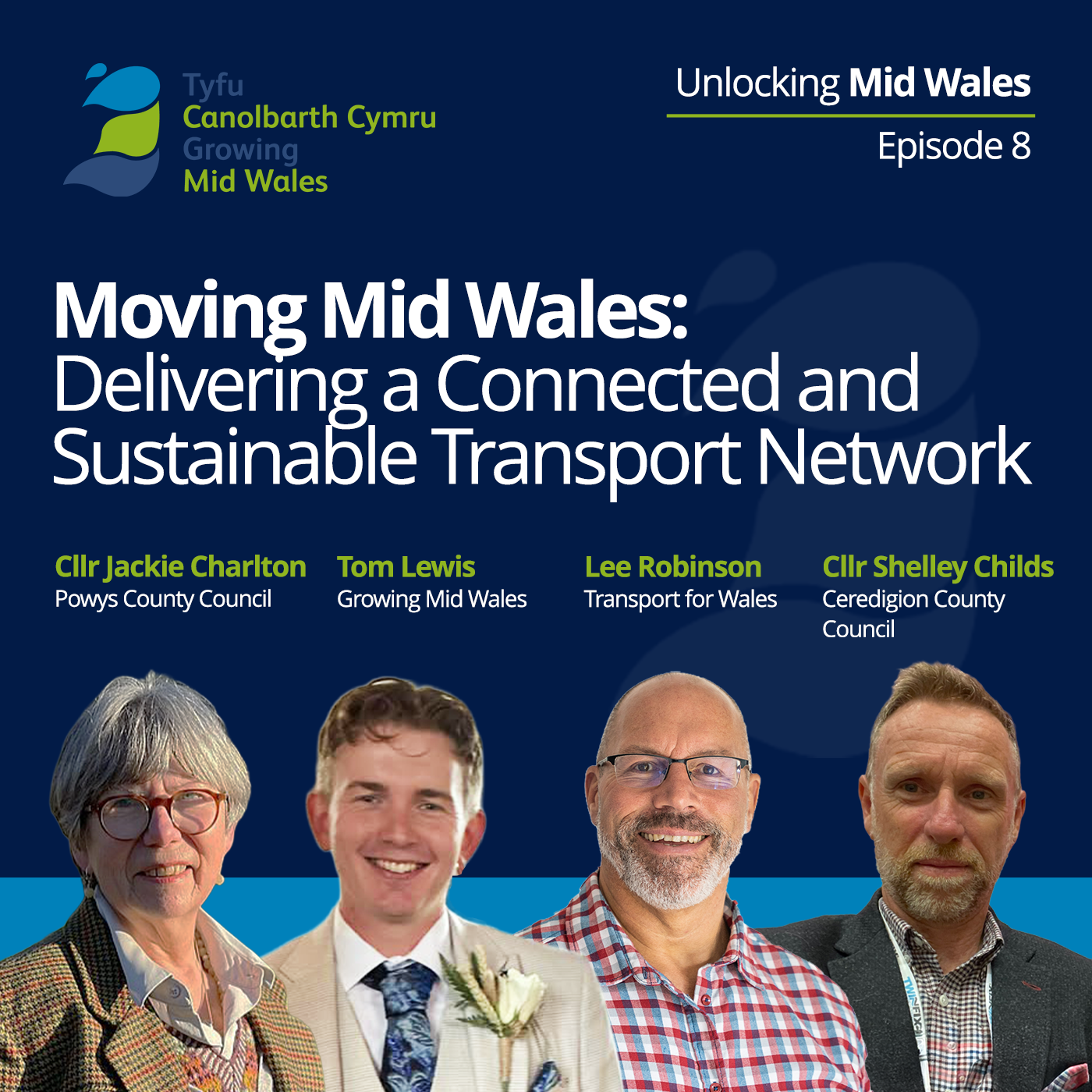
John Owen talks about this and more in Unlocking Mid Wales, the Growing Mid Wales podcast. Listen to the podcast here.