
Public consultation around grid infrastructure is challenging, particularly when proposals involve pylons and overhead lines. From my experience, the difference between resistance and constructive engagement often comes down to whether communities can see that their views are genuinely shaping what is being planned.
At Green GEN Cymru, we approach consultation as not a single event or a box to be ticked. It happens in stages, and at each stage we try to demonstrate what we have heard and how that feedback has influenced our thinking. That does not mean every request can be delivered in full, but it does mean changes are made. Being able to say, clearly, “you told us this and here is what we have done differently as a result” is central to building confidence in the process.
One of the most unhelpful outcomes during consultation is disengagement. When communities feel something is being done to them, the instinct can be to shut the door and hope it goes away. In practice, the strongest outcomes come when people are willing to engage, even if they are sceptical or opposed. That is the point at which local knowledge really starts to matter. Early plans are often informed by desktop assessments, but communities understand their landscapes, homes and day-to-day realities in ways that cannot be captured on a map.
We see this repeatedly across our routes. People may approach a project from a position of opposition but choose to engage on the basis that if something is going to happen, it should be done better. Through that engagement, projects change. Routes are adjusted, designs are reconsidered, and impacts are reduced where possible. Those conversations not only improve proposals, they also help people see that consultation is meaningful rather than symbolic.
Measuring success in public engagement is not straightforward. Attendance figures matter, but they only tell part of the story. What matters more is whether people understand what they are being asked, whether they provide informed feedback, and whether that feedback is reflected when plans return for the next stage. One of the clearest indicators of success is when people can see for themselves what has changed because they took the time to engage.
One consultation saw a resident point out that a proposed pylon would sit directly outside his home, something we had misunderstood from initial assessments. He explained the issue in detail, and that conversation led to our landscape and engineering teams reviewing the design immediately, using three-dimensional modelling to explore alternatives. That kind of direct, constructive feedback is invaluable, and it only happens when people believe the process is worth engaging with.
There is also a wider challenge, which is how to balance local concerns with national need. Grid infrastructure underpins every form of electricity generation. Whether people support wind, solar, community energy or publicly owned renewables, none of it works without sufficient grid capacity. That reality is not always well understood, and it is often the hardest part of the conversation.
In parts of Mid and West Wales, awareness of grid constraints already exists. People know the system is struggling to meet demand. In those areas, the need for additional capacity is easier to explain. Elsewhere, it requires a broader discussion about how daily life is changing. Transport, business and public services are all becoming more dependent on electricity. That includes industries such as tourism. If visitors are expected to travel, stay and charge electric vehicles, the local network has to be able to support that.
This is why I often say this should not be seen as a grid that goes through a community. It is a grid that is in the community, supporting that community’s ability to invest, grow and adapt. Parts of South and North Wales have been able to attract investment because grid capacity exists. Communities in Mid Wales should be able to benefit in the same way, particularly where renewable generation is already happening nearby.
Acceptance of the need for grid infrastructure does not end the debate, but it does move it forward. Once people understand why capacity is required, discussions can focus on where infrastructure should go, what can be undergrounded, and how impacts can be reduced. Those are difficult conversations, but they are productive ones.
Wales also needs to be honest about where it stands. We are playing catch-up. Other parts of the UK have moved faster in building grid capacity and renewable energy, and that early action has created skills, experience and businesses that are now being exported elsewhere. If Wales wants to be taken seriously, ambition needs to be matched by delivery.
Government has a role in being clear and confident about the need case. Companies like ours have a responsibility to explain what we are doing and why, in plain terms. Communities, in turn, have a role in engaging with proposals and challenging them constructively. None of this works in isolation.
The transition to a more electric future is already under way. The question is whether Wales builds the grid capacity it needs in a way that brings communities with it, or whether hesitation leaves parts of the country behind.
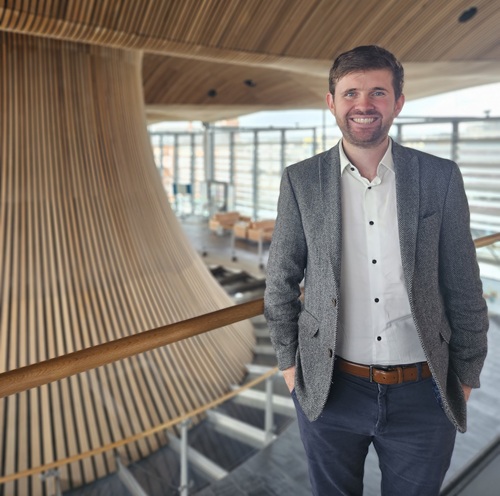
Owen Llewellyn Jones talks about this and more in the GRID podcast episode Power to the People – Communities and the Future of the Grid. Listen to the podcast here.