GUEST COLUMN:
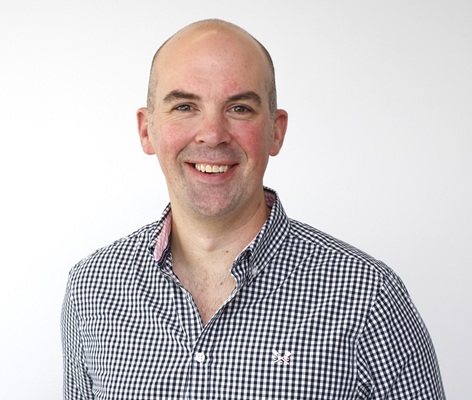
Matt Ginn
CEO
IQ Endoscopes

The past few years have shown just how important it is for health systems to look carefully at the pressures they face and the tools that might help relieve them. The challenges are well known: long waits, strained services, and a growing need for technology that can offer clinicians safe, reliable and timely options.
When I first became involved with IQ Endoscopes, it was clear that the traditional reusable model, while clinically effective, brought with it inefficiencies that could be difficult for hospitals to absorb. Our founder, Dr Patrick Ward-Booth, had spent years practising endoscopy and had seen how reusable devices could cause delays when equipment was being repaired, decontaminated, or was simply unavailable at the point of need. His experience crystallised the idea that a sustainable single-use device, if manufactured at an affordable cost, could offer a route to increasing capacity.
When I met Patrick in 2019, the company consisted of a small team with a concept and an early prototype. My own background had been in the commercial side of medical devices, and this concept had promise, but as an early-stage project it required funding and a clear route to development. We raised our first seed round through the Development Bank of Wales, allowing us to build those first prototypes and start tackling the technological challenges.
Those challenges were substantial. Replicating the ergonomics, image quality and handling of a reusable scope in a single-use device requires precision and resilience. But the question that stayed with me was not only whether we could build it, but whether we were solving the right problem. My previous experience in the UK and overseas had taught me that adoption is rarely just about performance; it is about whether a technology fits a clinical need and a service under strain. When I started speaking with clinicians in Wales, it became clear that this was exactly the type of environment where that question could be properly tested.
That opportunity came through Cardiff and Vale Health Board’s engagement with the Cardiff Capital Region Challenge Fund. Although the Fund itself was only a modest part of our wider investment, it allowed us to do something different: to examine the clinical, operational and sustainability requirements in far greater depth than most early-stage companies are able to. We were introduced to the clinical team in Cardiff, who were facing significant pressures in their endoscopy services. They were open about the constraints and clear about the concerns that would need to be addressed, particularly in relation to sustainability. Instead of guessing what the market needed, we were able to work directly with clinicians, procurement teams, sustainability leads and waste management specialists to understand their challenges in detail.
This changed our trajectory. At the outset, we believed the primary challenges were ergonomic replication, image quality and manufacturing cost. Through the Challenge, a fourth pillar became just as significant: sustainability.
Looking at sustainability purely through the lens of plastics or packaging does not give a full picture. Working with the Cardiff team encouraged us to examine the entire patient pathway, from referral through to treatment. That included the environmental cost of repeated patient travel, the energy required for decontamination of reusable devices, and the delays caused when equipment is unavailable. By mapping this pathway, we learned that a single-use device, when adopted in the right clinical setting, could reduce both carbon impact and waiting times. Cardiff’s own analysis showed that, in their system, adopting such a device could save up to 2,000 tonnes of CO2 a year when combined with shorter treatment times and more streamlined patient flow.
Having an independently produced assessment of the clinical and environmental impact has had wider benefits for us as a business. It offered impartial evidence that we could take to investors at a time when medical technology funding is deeply competitive. It also ensured that any future claims about impact are grounded in actual data rather than optimistic assumptions. The Challenge allowed us to pass funding directly to the clinical team to audit real patients and gather accurate figures. That independence matters, both for credibility and for responsible innovation.
It has also shaped how we think about growth. Thanks to continued development work, our team has expanded by around 20 people over the past three years, all based in Wales. As we move into the next stage of manufacturing and controlled commercialisation, our base in Monmouthshire gives us a strong platform. The first priority is a proof-of-concept with the Cardiff team, and once that data is secured, we hope to discuss with the Welsh Government how the learning from Cardiff could translate to other health boards across Wales. We also hold UK and US regulatory approvals, which positions us to explore opportunities beyond Wales in the future. But our focus in the next 18 to 24 months is on controlled launch, ensuring that every deployment generates solid evidence and is manageable for both clinicians and our own team.
There is a great deal still to do. Developing a medical device that fits seamlessly into clinical pathways requires continued testing and refinement. But being part of the Challenge has accelerated our understanding of the problem, strengthened the product, and enabled deeper collaboration with the people who will ultimately use it. That partnership between clinicians, procurement teams, sustainability leads, funders and industry has given us clarity that we would not otherwise have achieved at this stage.
For patients, the potential is straightforward: faster diagnosis, fewer delays, and a system that is better able to absorb demand. For us as a company, it has provided both evidence and direction. For Wales, it shows what can happen when public and private sectors come together to explore solutions to complex problems.
Matt Ginn talks about this and more in the Cardiff Capital Region podcast episode Endoscopy Challenge: Idea, Innovation and Impact. Listen here.