Welsh businesses are continuing to pursue opportunities to grow and scale despite subdued confidence, rising costs and challenging economic conditions, according to the latest Economic Intelligence Wales report .
The quarterly report, covering the opening quarter of the 2026/27 financial year starting on April 1, highlights the pressures facing small and medium-sized enterprises (SMEs), with weak business confidence across the UK and more businesses closing than opening in Wales.
However, the findings also point to continued ambitions for growth, with more than a third of Welsh businesses expecting their performance to improve over the coming year.

The Federation of Small Businesses’ UK Small Business Index of business confidence fell to -57.4 during the second quarter of 2026, with just 21.7% of UK SMEs reporting growth over the previous three months.
In Wales, 2,535 new businesses were established during the quarter, compared with 2,780 business closures, underlining the challenging environment facing entrepreneurs and smaller firms.
Despite this, the Office for National Statistics’ Business Impacts and Conditions Survey for July 2026 found that 36.8% of Welsh businesses expected their performance to improve over the following 12 months, compared with 31.9% across the UK.
The report highlights the contrasting forces shaping the economy. While public spending remains constrained and volatility in energy prices continues to affect business costs and consumer confidence, UK GDP grew by 0.4% in the three months to the end of July 2026.
However, the outlook for the closing months of the year remains difficult. The Bank of England maintained its base rate at 3.75% in September, while inflationary pressures and higher energy costs continue to create uncertainty for businesses planning future investment.
Access to finance remains an important factor in helping viable businesses respond to these conditions and pursue longer-term growth.
The Development Bank of Wales completed 151 loans, equity and property investments totalling £48.4 million during the first quarter of its 2026/27 financial year starting April 1, creating or safeguarding almost 1,140 jobs.
Around 60% of those investments were made to support businesses looking to grow, highlighting the continued demand for finance to help Welsh firms expand and scale their operations.
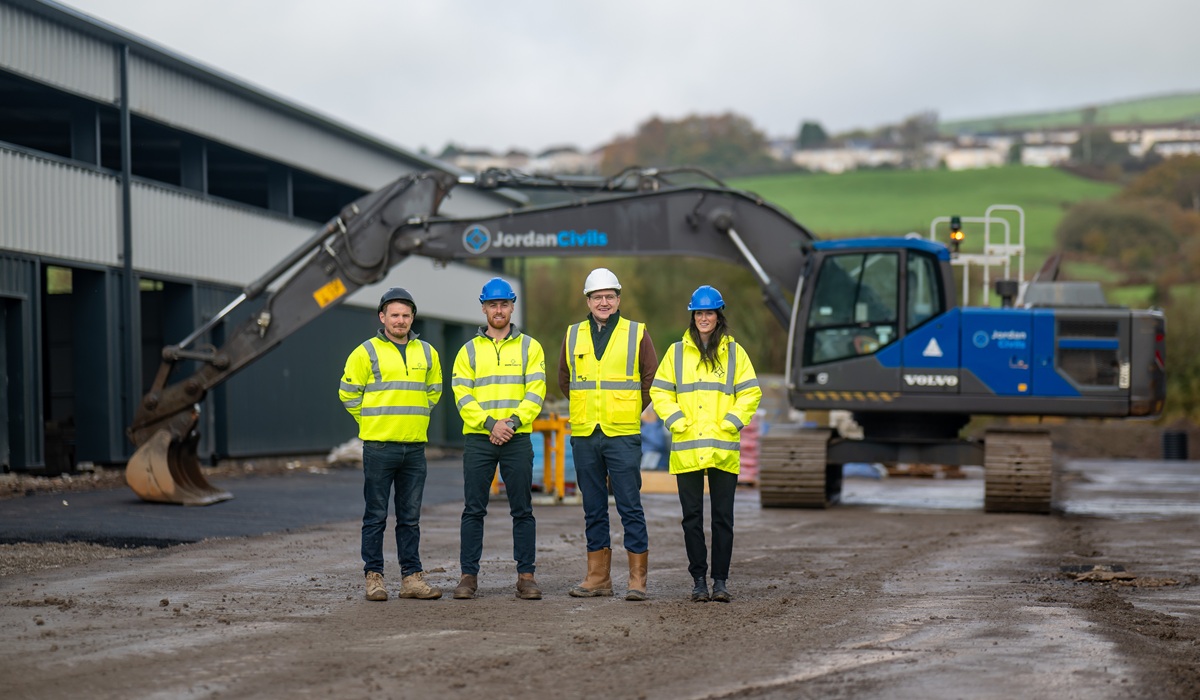
Businesses in south east Wales accounted for almost 55% of the total investment value and approximately 52% of the jobs created or safeguarded during the quarter. The construction sector secured £13.7 million in investment, while businesses in health and social work received £6.8 million, supporting 193 jobs.
The findings demonstrate that, even against a difficult economic backdrop, businesses are continuing to seek finance to invest in their operations, pursue new opportunities and build the capacity needed for future growth.
Max Munday, Professor of Economics at Cardiff Business School, Director of the Welsh Economy Research Unit and an author of the report, said:
“Business confidence remains weak, and the figures for business births and deaths in Wales demonstrate the pressures facing the SME sector. However, the picture is more complex than the confidence indicators alone suggest. More than a third of Welsh businesses expect their performance to improve over the coming year, indicating that there remains an appetite for growth despite the difficult trading environment.
“The challenge is to ensure that businesses with viable growth plans can access the finance and support they need, particularly when uncertainty makes investment decisions more difficult.”
Rhian Elston, Chief Investment Officer at the Development Bank of Wales, added:
“Businesses across Wales are operating in a challenging environment, with cost pressures and economic uncertainty continuing to influence investment decisions. But many are also looking beyond the immediate difficulties and identifying opportunities to grow.
“The fact that around 60% of our investments during the quarter were to support business growth is encouraging. It shows that Welsh businesses are continuing to invest in their future, whether that means expanding capacity, entering new markets or scaling their operations.
“Starting or growing a business requires access to the right finance at the right time. Our role is to help ambitious Welsh entrepreneurs and businesses secure that funding, enabling them to invest, create jobs and build stronger, more sustainable businesses for the future.”
Economic Intelligence Wales is a research collaboration between the Development Bank of Wales, Cardiff Business School, Bangor Business School, the Enterprise Research Centre and the Office for National Statistics (ONS). The collaboration collates and analyses data to provide independent insight into the Welsh economy.