


Energy costs are unquestionably one of the biggest challenges facing manufacturers.
When prices rise, the understandable response from industry is to ask what government can do to help. We hear calls for subsidies, support schemes and interventions designed to reduce the impact of energy bills on businesses.
But I think we’re missing an important part of the conversation.
Before we focus entirely on helping manufacturers pay for the energy they’re consuming, shouldn’t we also be helping them understand how much of that energy they actually need to use?

Because there is a fundamental difference between expensive energy and wasted energy.
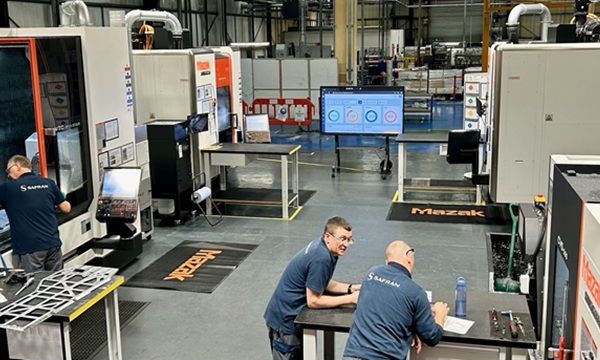
We are currently working with a large manufacturing business in Bridgend where we’re using technology to provide much greater visibility of energy consumption across its processes. What we’re already seeing is significant periods of idle time where processes continue consuming energy without producing anything.
If machinery sits idle for 15 minutes, 30 minutes, or longer, why should it keep consuming energy at the same rate?
By identifying those periods and introducing measures such as automatically shutting equipment down after a defined period of inactivity, we believe there is the potential for six-figure savings in that business alone.
That should make us think differently about the industrial energy debate.
I’m not suggesting government shouldn’t support manufacturers facing internationally uncompetitive energy costs. There are structural issues affecting UK industry that individual businesses cannot solve themselves.
But financial support shouldn’t remove the incentive to become more efficient.
If a business is potentially wasting 10%, 15% or 20% of the energy it purchases, helping it pay the bill without addressing that inefficiency doesn’t solve the underlying problem.
This is where technology and better use of data can make a significant difference.
Manufacturers increasingly have the ability to understand not only how much electricity, gas, water or oil they consume, but where and when they consume it. That information can then be considered alongside production performance.
The result is a much clearer picture of what is actually happening inside the factory.
For me, this is also part of a much bigger productivity conversation.
Government support for industry shouldn’t only be about making existing costs easier to absorb. It should help businesses become more productive, efficient and ultimately more competitive.
If public investment can help a manufacturer permanently reduce its energy consumption, improve its processes and lower its operating costs, the benefit continues long after the intervention ends.
That is a much more sustainable model of business support.
Manufacturing will always require energy, and the price businesses pay for it matters enormously.
But before we decide how much help businesses need paying for their energy, perhaps the first question should be much simpler:
How much of that energy do they really need to use?