




A major change to the rules governing domestic solar could open up home-generated electricity to households previously unable to install conventional rooftop systems.
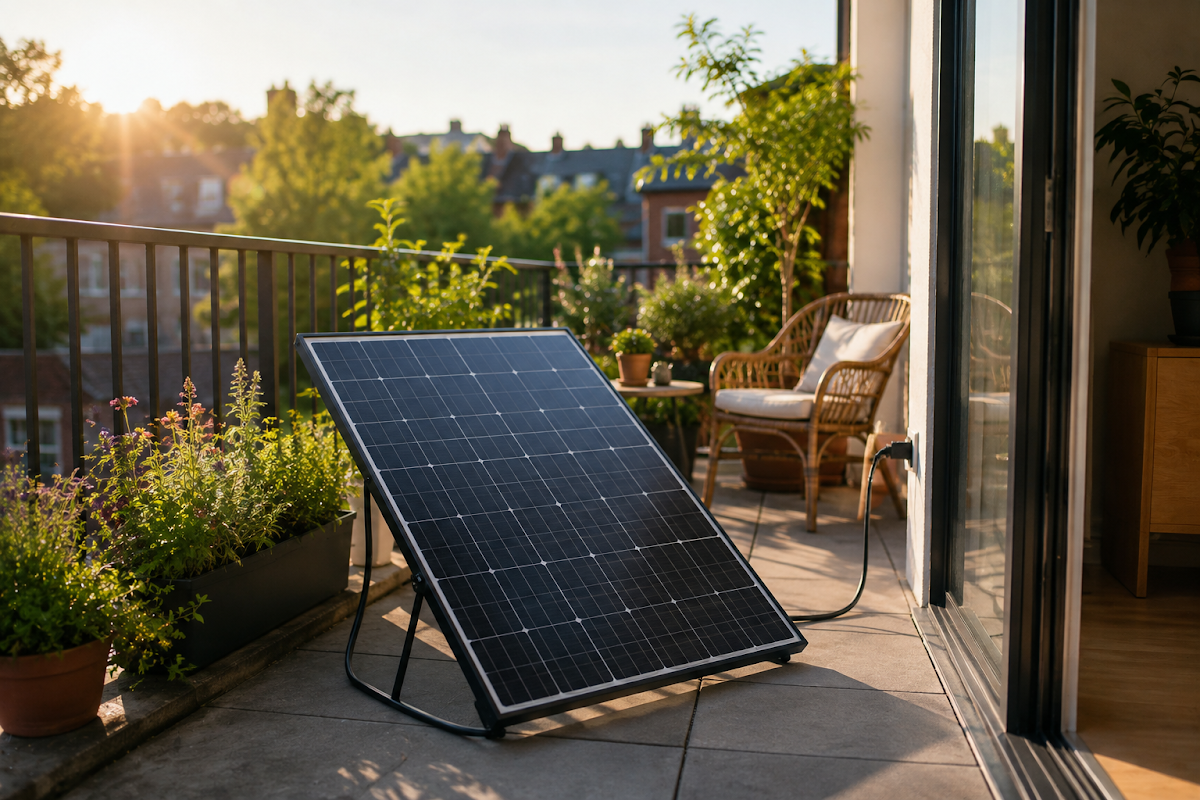
Plug-in solar panels can now legally be bought and used across Great Britain, allowing consumers to generate electricity from panels placed in suitable outdoor spaces or on some balconies and feed that power directly into their homes.
The technology represents a potentially significant shift in the domestic renewable energy market because it removes some of the cost and property barriers traditionally associated with solar.
Unlike conventional rooftop systems, plug-in solar does not require the same permanent installation. Individual kits can generate up to 800W and, according to the UK Government, could provide as much as 20% of the electricity used by an average home.
That could translate into annual bill savings of up to £110, although the amount saved will depend on factors including location, positioning, sunlight and household electricity consumption.
The change is particularly relevant to people who have previously found themselves effectively excluded from domestic solar, including renters and people living in flats or properties without suitable roofs.
Energy Secretary Miatta Fahnbulleh said plug-in solar offered households a simpler and more affordable way of taking greater control of their energy costs.
The regulatory change follows independent electrical safety testing, with the Government saying compliant products are compatible with UK domestic wiring.
The technology is already established elsewhere in Europe. Germany has become one of the leading markets for plug-in solar, with around half a million new devices plugged in during the past year.
The emergence of the technology in Britain could now create a new consumer energy market.
Major retailers including Amazon, Argos, Currys and Wickes have committed to selling plug-in solar products, while British Gas has also indicated that it intends to make the technology available to customers.
Solar Energy UK Chief Executive Chris Hewitt said making plug-in solar lawful would extend access to cheap, clean power to households that had previously been unable to benefit.
The change comes during a period of rapidly increasing consumer interest in generating and storing electricity at home.
Almost 150,000 certified solar installations were recorded during the first six months of 2026, according to MCS figures cited by the Government, 17% higher than the previous record set during the same period in 2025.
Battery installations are also growing rapidly, with around 36,000 certified installations during the first half of the year, almost double the equivalent period a year earlier.
Conventional rooftop solar can deliver substantially greater savings, with the Government estimating potential reductions in electricity costs of up to £480 a year.
Plug-in systems, however, potentially occupy a different part of the market: households looking for a lower-cost and less permanent route into generating their own electricity.
There are still restrictions. Consumers will need to establish whether permission is required before installing a system, particularly those living in rented accommodation, flats, listed buildings or properties subject to planning controls.
But the arrival of plug-in systems means domestic solar is no longer necessarily dependent on owning a house with a suitable roof and having the capital available for a conventional installation.
For the UK’s growing home-energy market, that could prove more significant than the £110 annual saving alone.